

Post

The ePrint: 2026/1591 Quantum Algorithm Does Not Solve DCP limits

Article by Aparna Gupte (MIT), Seyoon Ragavan (Google Quantum AI & MIT), and Mark Zhandry (Google Quantum AI & Stanford University) From the articles abstract:“In this note, we formally show that the recent algorithm by Simon (ePrint:2026/1591, August 11 2026) does not extract the least-significant bit of the dihedral coset problem (DCP) secret with non-negligible… Read more »


Post

Why post-quantum signatures are breaking TLS handshake limits

That is explained by Ivan Ristic (Red Sift). From the blogpost:“Post-quantum signature sizes are up to 34x larger than ECDSA. Here’s why ML-DSA certificate chains blow past the 14.5 KB TCP congestion window. […] In the following table, we compare the key aspects of ML-DSA to those of traditional cryptography. We show values for the… Read more »

Post

What actually is post-quantum technology?

From the blogpost:“Every day, encryption protects the digital services we rely on. It keeps our bank transactions secure, safeguards medical records, enables confidential government communication and protects the critical infrastructure that keeps society running. […] TNO, the Netherlands Organisation for Applied Scientific Research, works with governments, industry and research partners to translate scientific knowledge into… Read more »

Post

PQC in Plaintext: Google Cloud’s post-quantum cryptography roadmap

From the blogpost:“[…] We’ve based our PQC migration strategy on the Google Quantum Threat Model, prioritizing protection across three key domains: The roadmap to 2029 We’ve established specific customer-centered journeys for Google Cloud to achieve quantum readiness that allow us to prioritize our quantum-safety initiatives. By adopting this risk-based approach, we focus on the core… Read more »

Post

Preparing for post-quantum cryptography – Part 2: Know what matters

By the Australian Signals Directorate From the blogpost:“[…] Preparing for post-quantum cryptography (PQC) starts long before the quantum threat arrives. To help organisations take practical steps now, our LATICE framework provides a structured approach to transitioning to PQC. This article is part of an ongoing series exploring each phase of the framework:

Post

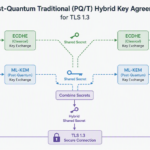
Post-Quantum Traditional (PQ/T) Hybrid Key Agreement Mechanisms for TLS 1.3

The RFC proposed standard is now available on the IETF Datatracker (see link below). About the QSC Atlas:“ML-KEM is a key encapsulation mechanism (KEM) defined in [NIST-FIPS-203]. It is designed to withstand cryptanalytic attacks from quantum computers. [RFC9954] defines a framework for combining traditional key exchanges with next-generation key exchange in TLS 1.3. The goal… Read more »

Post

QSC Atlas – The geopolitics of the post-quantum transition

This atlas is now available online. About the QSC Atlas:“An independent, evidence-based reference on how governments are migrating to quantum-safe cryptography, built only from official institutional sources and maintained alongside advisory work on the transition. The Atlas is maintained within the Cybersecurity@CEPS Initiative at the Centre for European Policy Studies. How it classifies countries, and… Read more »

Post

A Study of PQC Migration Frameworks

As announced in a recent research paper/chapter from the conference proceedings of MAgiCS (Migration and Agility in Cryptographic Systems) 2026. From the paper’s abstract:“Quantum-safe alternatives are expected to replace most of the asymmetric cryptography algorithms currently in use in the near future. The migration of numerous systems and infrastructures to PQC is guided by the… Read more »

Post

PQSpy Extension for Firefox

Bas Westerbaan shows whether the connection was protected with post-quantum encryption. A short announcement of the latest update via LinkedIn, by Bas Westerbaan himself: https://www.linkedin.com/posts/baswesterbaan_i-updated-pqspy-a-little-firefox-extension-share-7487861733542354945-cKFy