

Read more at: https://www.elektronikpraxis.de/post-quantum-kryptografie-warum-benoetigen-wir-pqc-und-wo-bleiben-die-standards-a-d28c015c41db438c2e5657512736f2e3/, Origin of text: Magazine “Elektronikpraxis”: https://www.elektronikpraxis.de Language(s): GER Published: May 14th 2025

INVITED ONLY event, September 18 – 19, 2025, Barcelona, Spain Entrust organizes an invite-only forum for IT Security Leaders. This gathering is crafted to delve into cryptographic migration strategies, hybrid approaches, and crypto-agility for transitioning to Post-Quantum Cryptography (PQC). Topics of that event: This is an invite-only event. Please ask for your seat by writing… Read more »
Post
SeQuCom

October 16 & 17, 2025, Frankfurt am Main, Germany Executive Track Understand exactly why quantum computing and AI (especially AI-driven mathematical advances) pose an immediate and tangible threat to your current cybersecurity posture. Explore actionable strategies from Europe’s leading initiatives in Post-Quantum Cryptography (PQC) and Quantum Key Distribution (QKD). Learn how upcoming regulations will impact… Read more »

“As we enter the quantum era, post-quantum cryptography is essential to ensure a high level of cybersecurity, fortifying our systems against future threats. The post-quantum cryptography roadmap provides a clear direction to ensure the robust security of our digital infrastructure.”, said Henna Virkkunen, Executive Vice-Präsident for Technological Sovereignty, Security, and Democracy of the EU Commission… Read more »

Information by the U.S. Government Accountability Office (GAO) Quantum computers could address some critical problems that are not possible to solve with conventional computers within the span of a human lifetime. However, GAO has reported that the emergence of quantum computers could undermine the security of widely used cryptographic methods (e.g., encryption) that federal agencies… Read more »
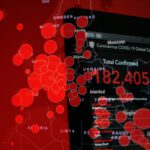
The Quantum Threat Tracker is a tool for quantifying the threat quantum computers pose to real-world cryptosystems. In recent years, quantum computing has seen a flurry of improvements in error correction, magic state distillation, arithmetic circuits, and more. As a consequence, the threat posed by Shor’s algorithm against public-key cryptographic protocols has changed from being… Read more »

Q-Design is made up of a consortium of 15 companies and organizations that will be responsible for developing this pioneering project and designing services that provide value to the end user. The European Space Agency (ESA) has announced an agreement with Hispasat for the development of the initial phase of Q-Design, the first project worldwide… Read more »

Canada, under the leadership of the Communications Security Establishment Canada (CSE) and Public Safety Canada, hosted the G7 Cybersecurity Working Group (Working Group) from May 12 to 13, 2025, in Ottawa, to discuss shared issues on cyber security and emerging technology. The Working Group was established in 2024 under Italy’s G7 leadership and is composed of… Read more »

The AWS Key Management Service (KMS) now supports the FIPS 203 Module-Lattice Digital Signature Standard (MLDSA), a quantum-resistant digital signature algorithm designed to help organizations combat emerging quantum computing threats. This post-quantum signature algorithm is one of the select algorithms standardized by NIST to protect sensitive information well into the foreseeable future, even after the… Read more »

Participation is anonymous and is possible until 11.08.2025 The BSI is the cyber security authority of the Federal Government and the shaper of secure digitalization in Germany. Its goal is the secure use of information and communication technology in government, business and society. With the support of the BSI, information security should be understood as… Read more »